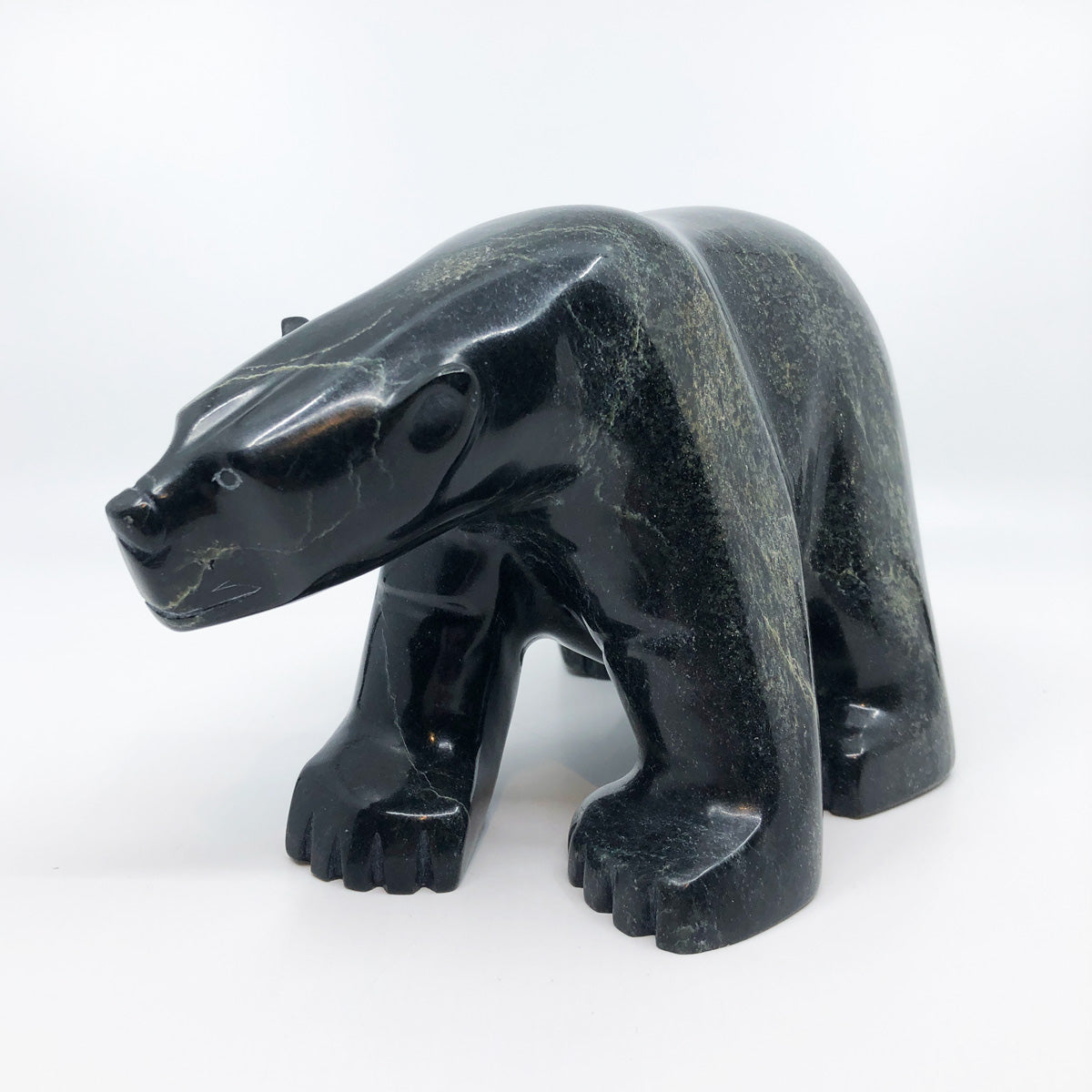
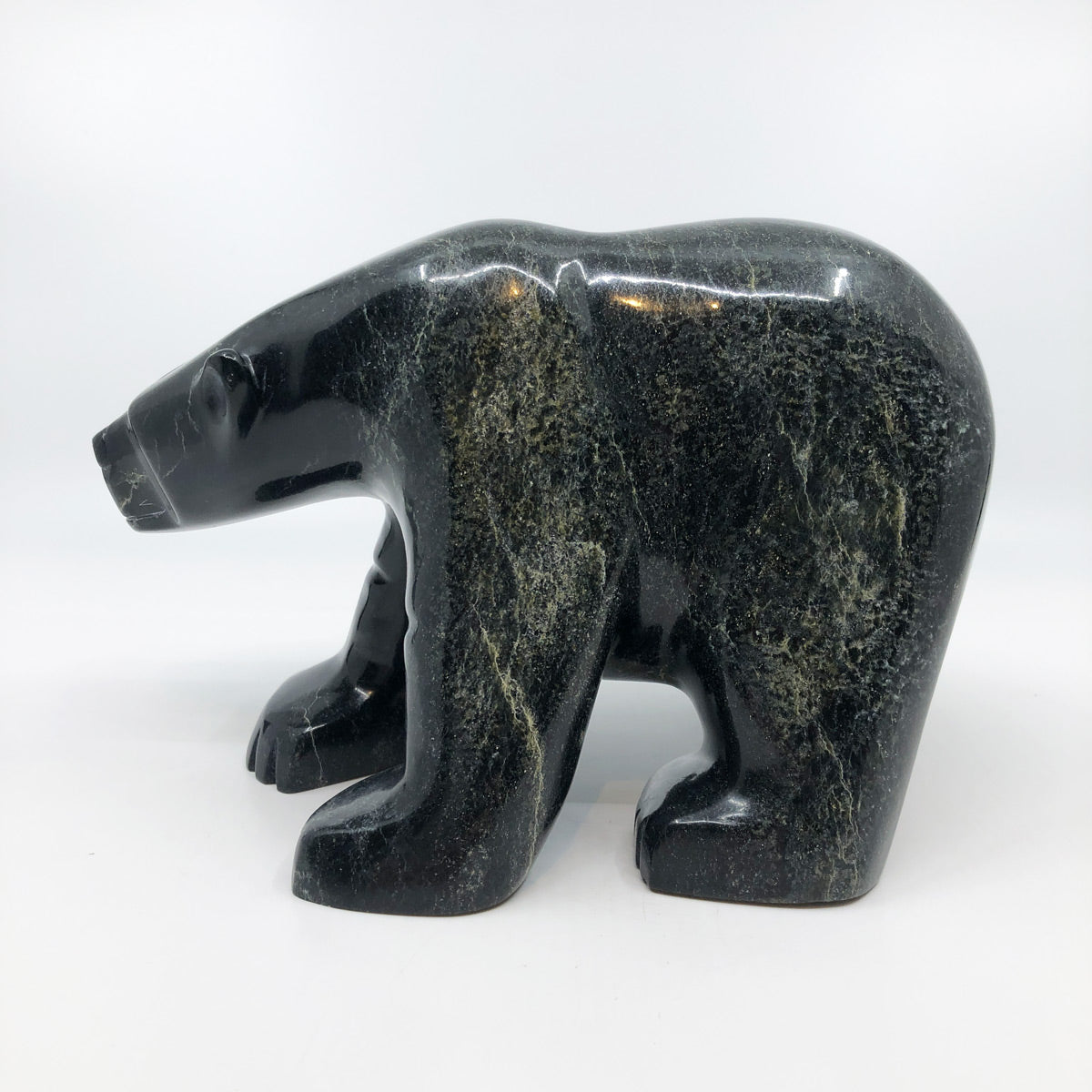
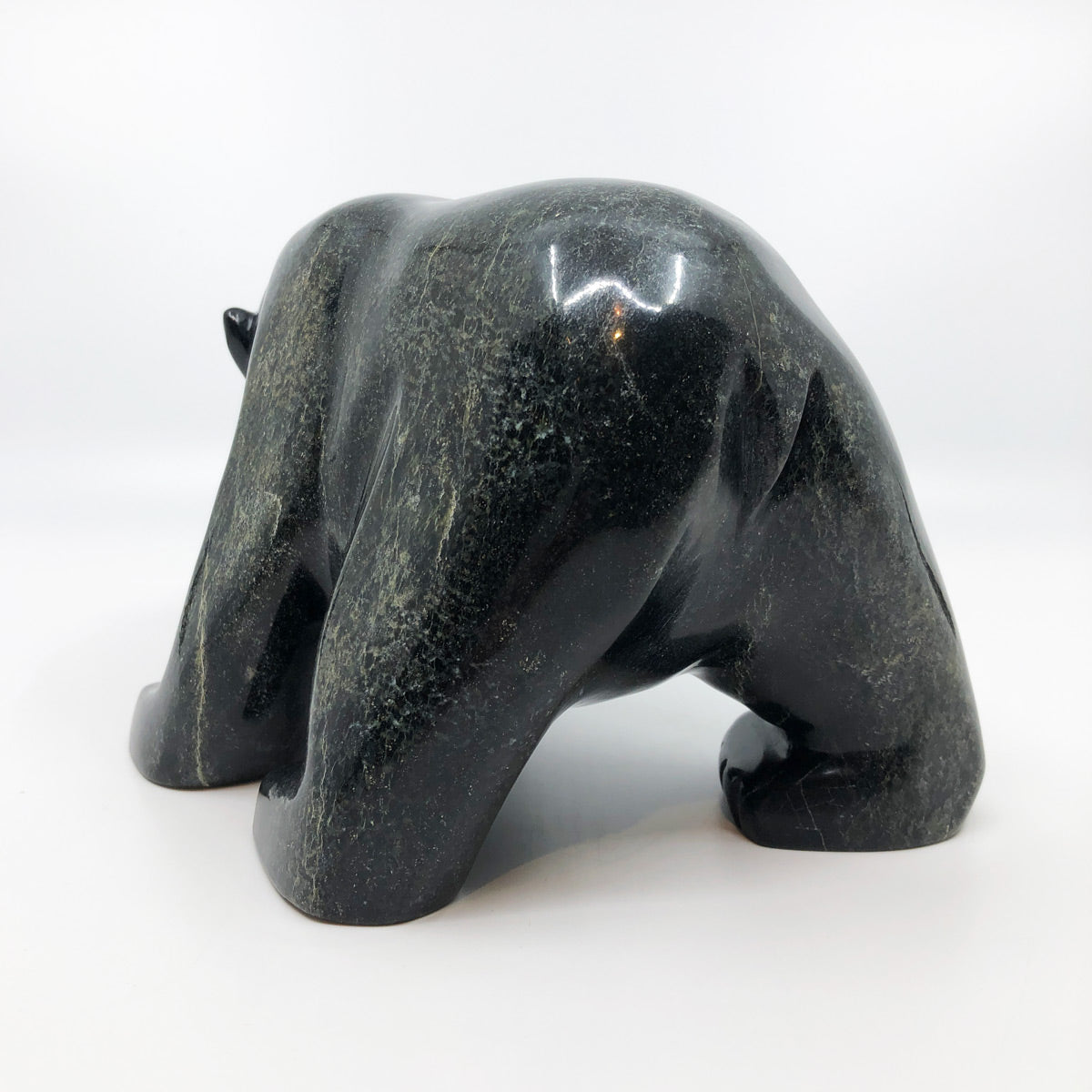
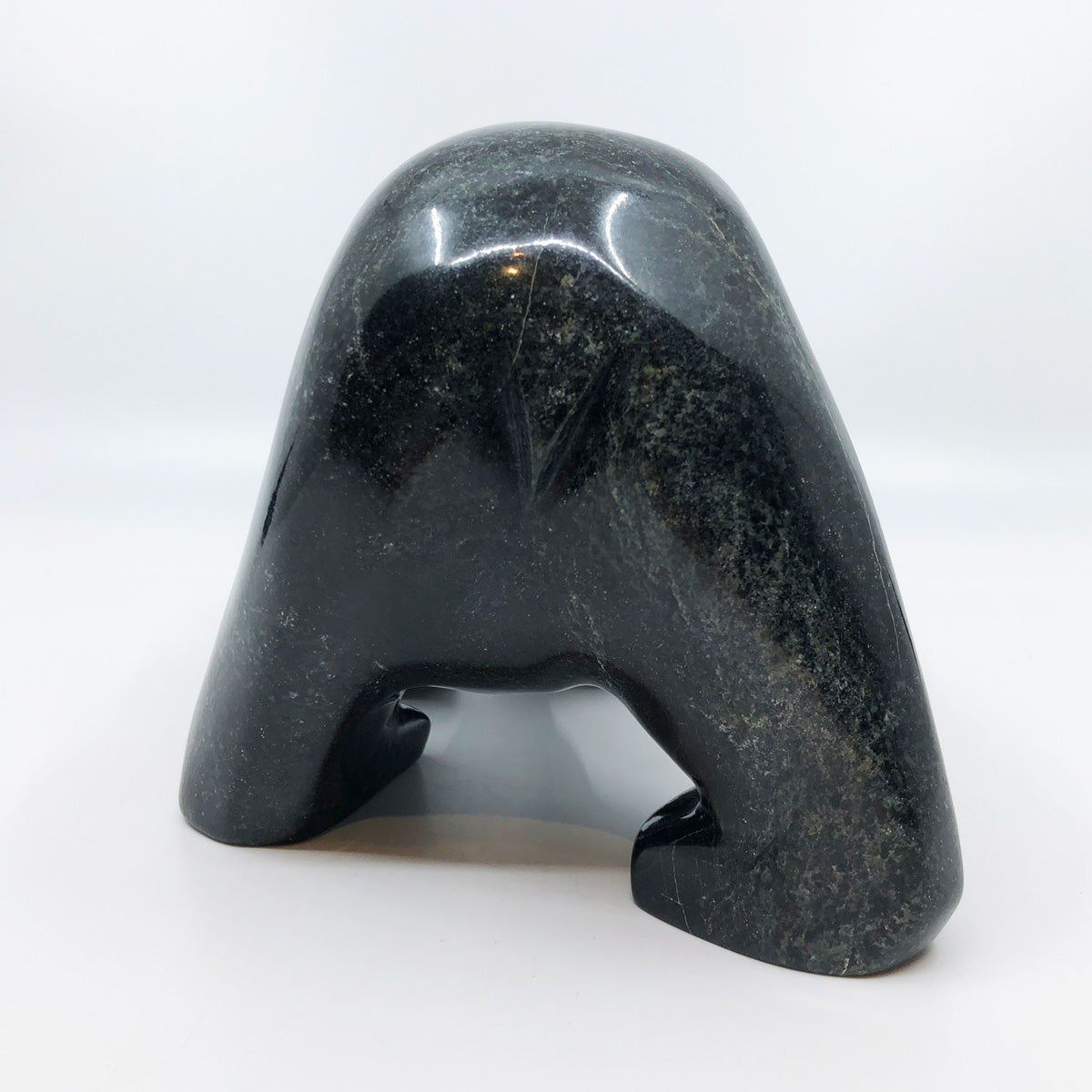
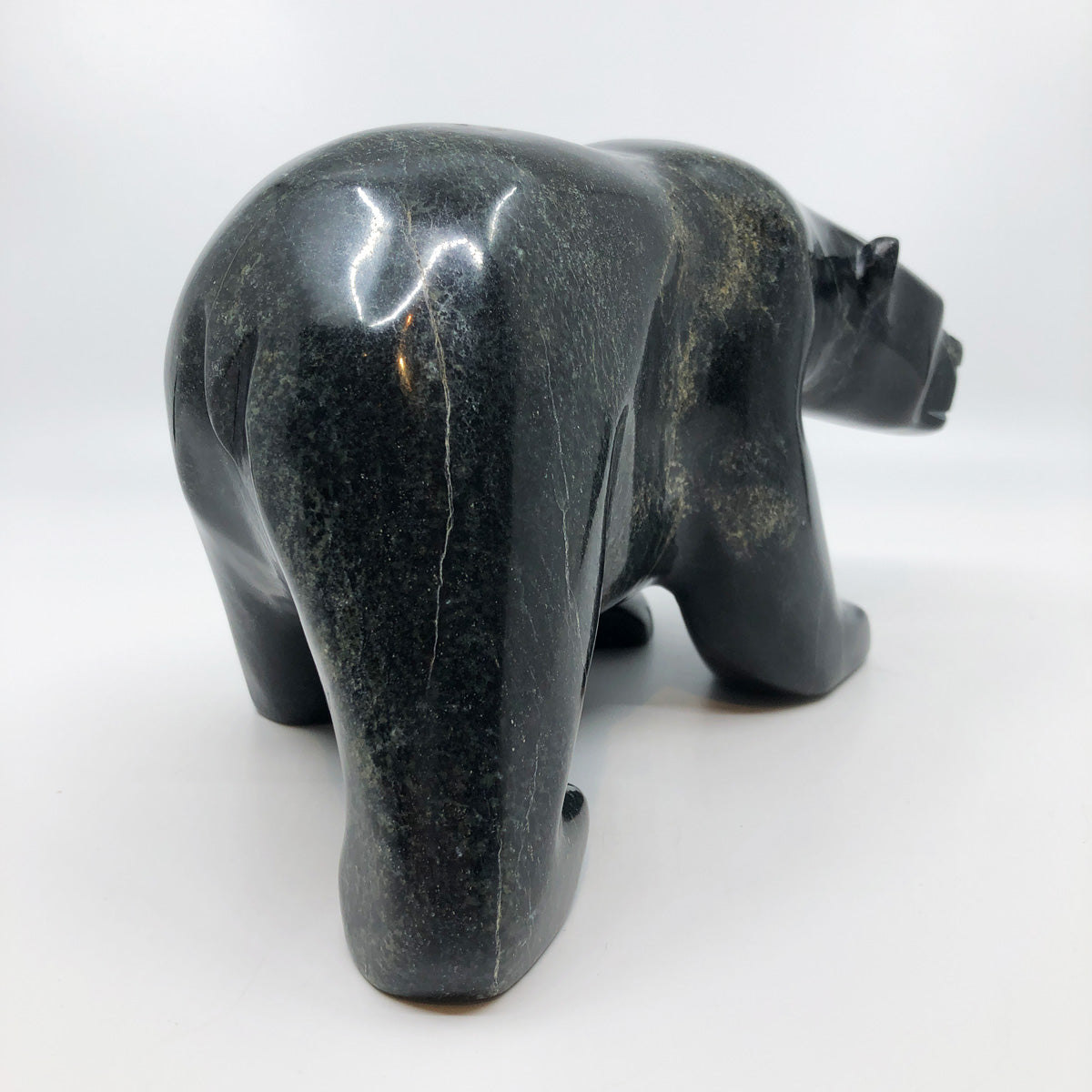
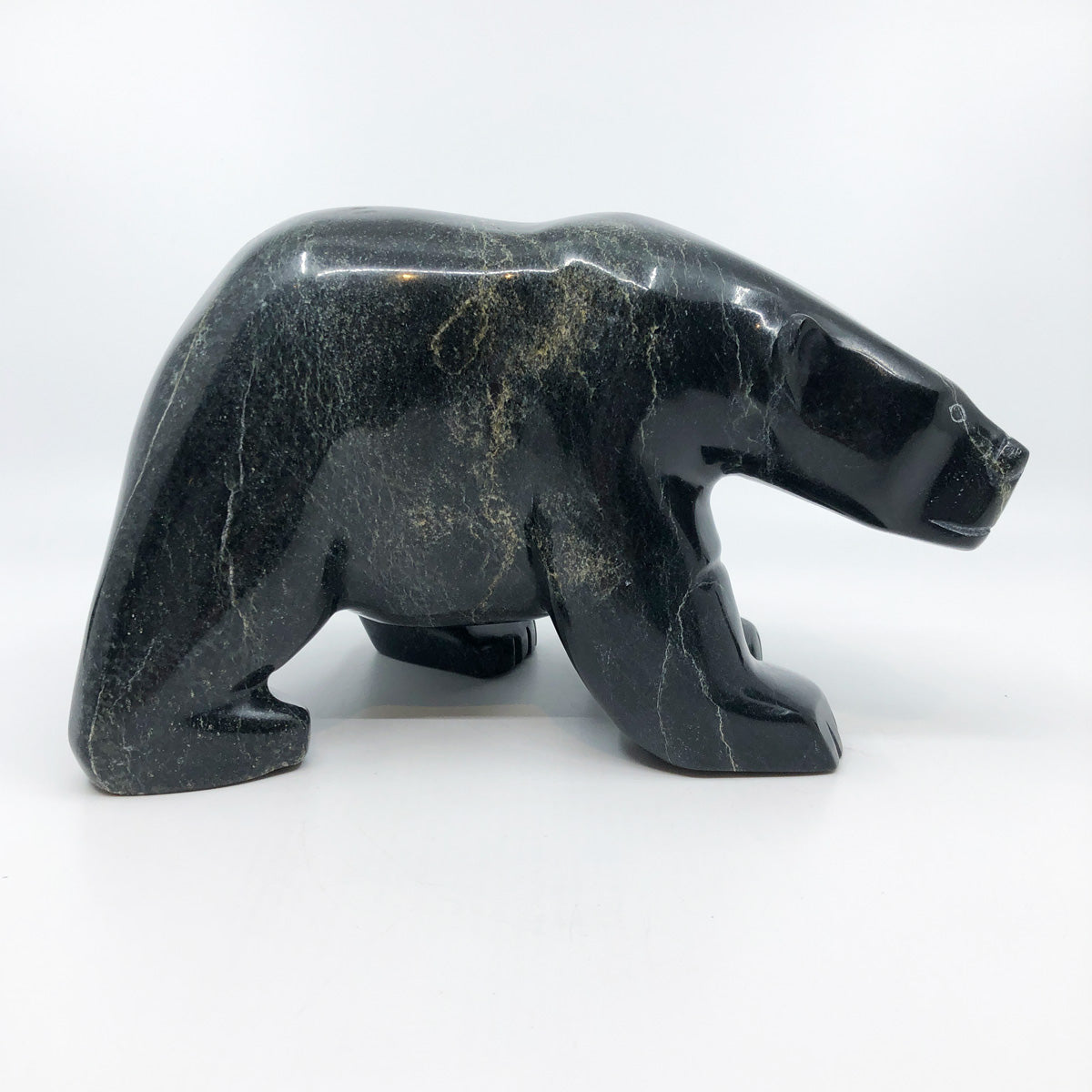
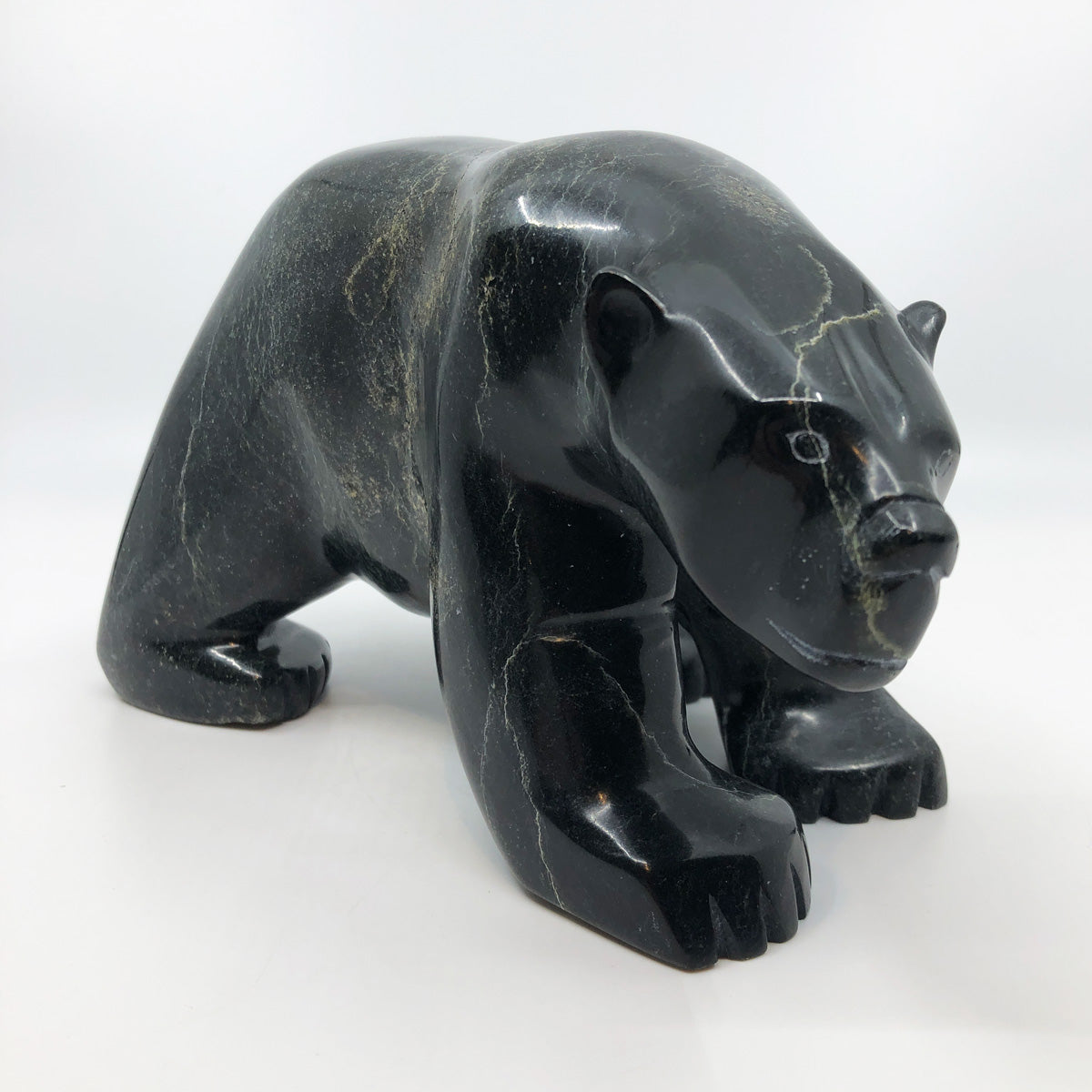
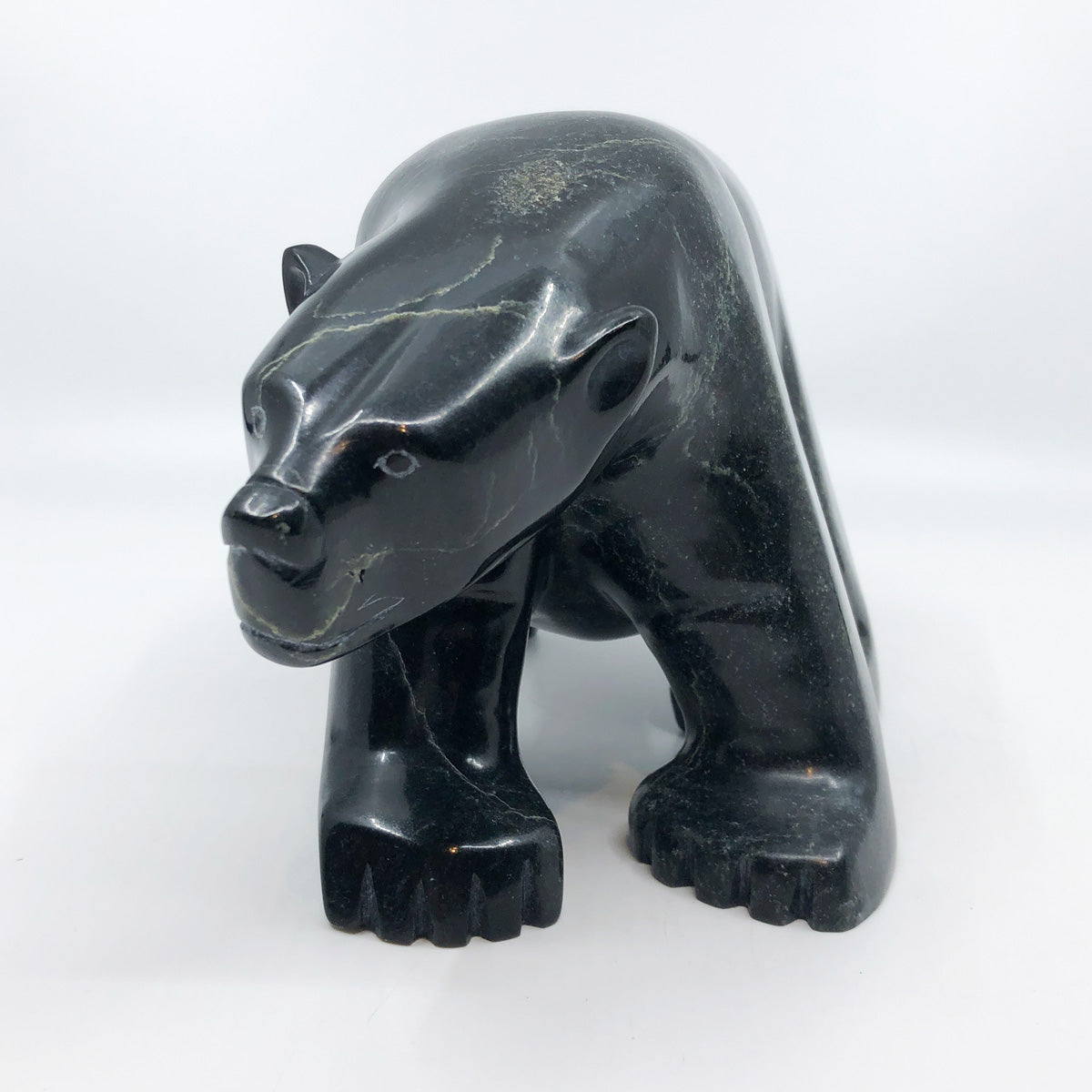
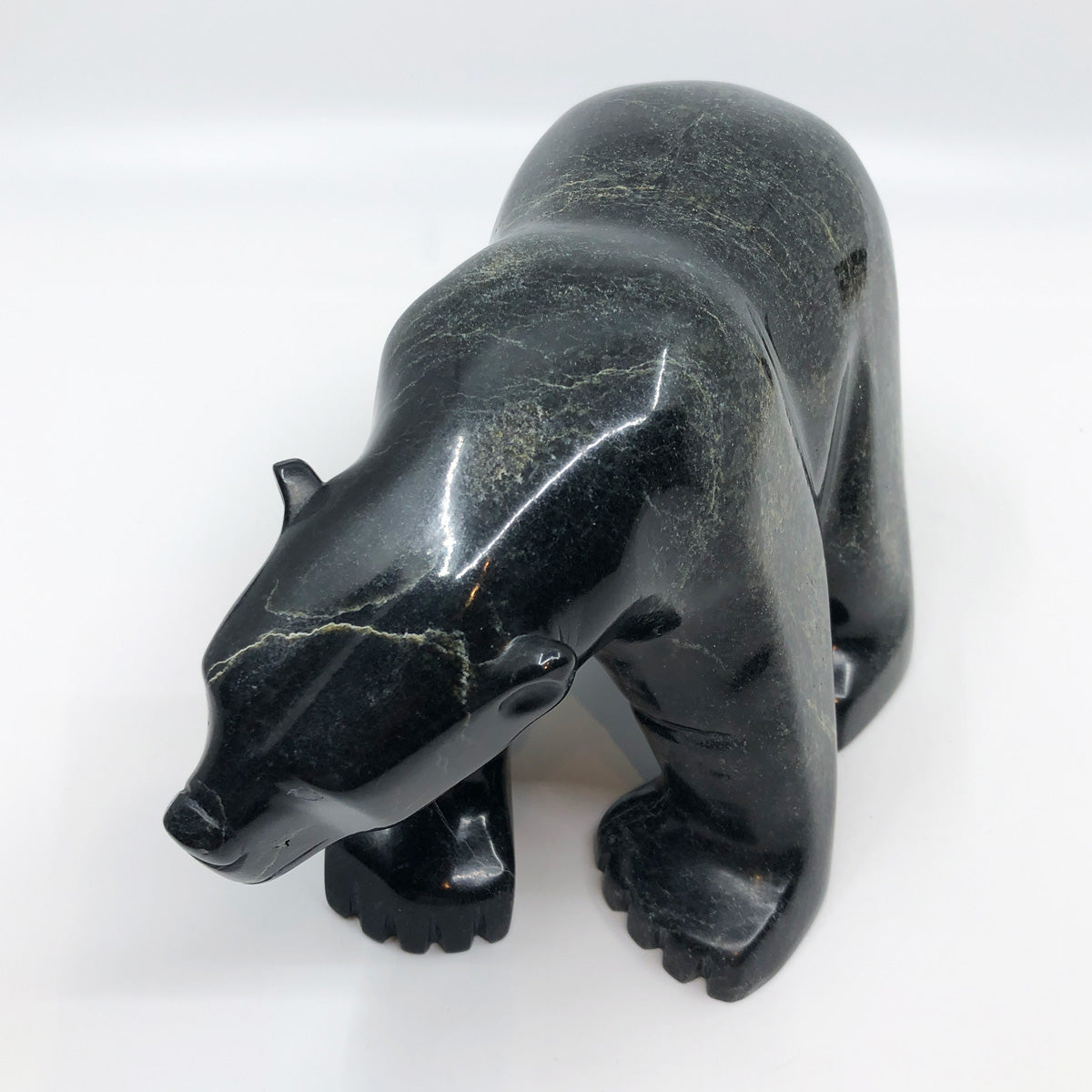
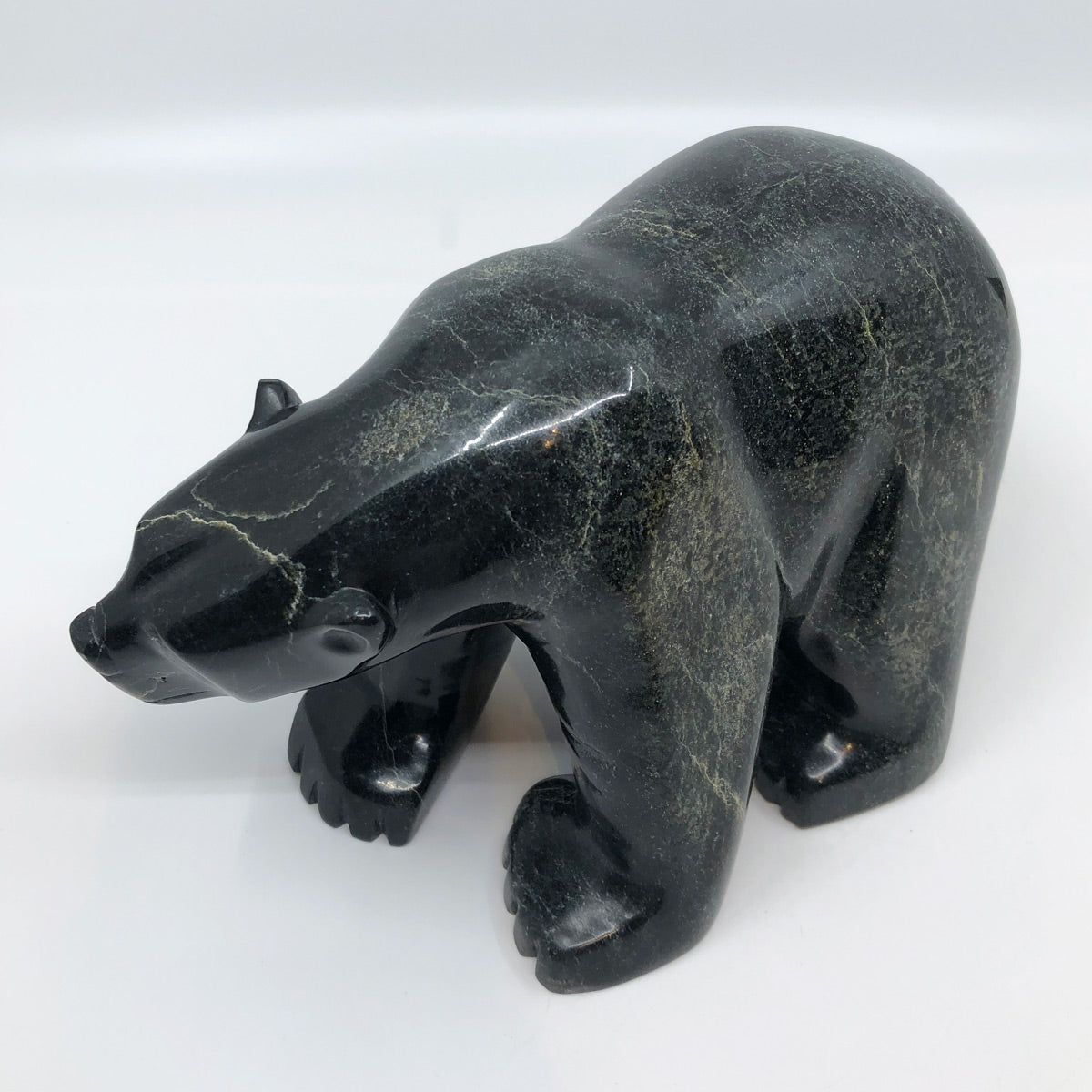
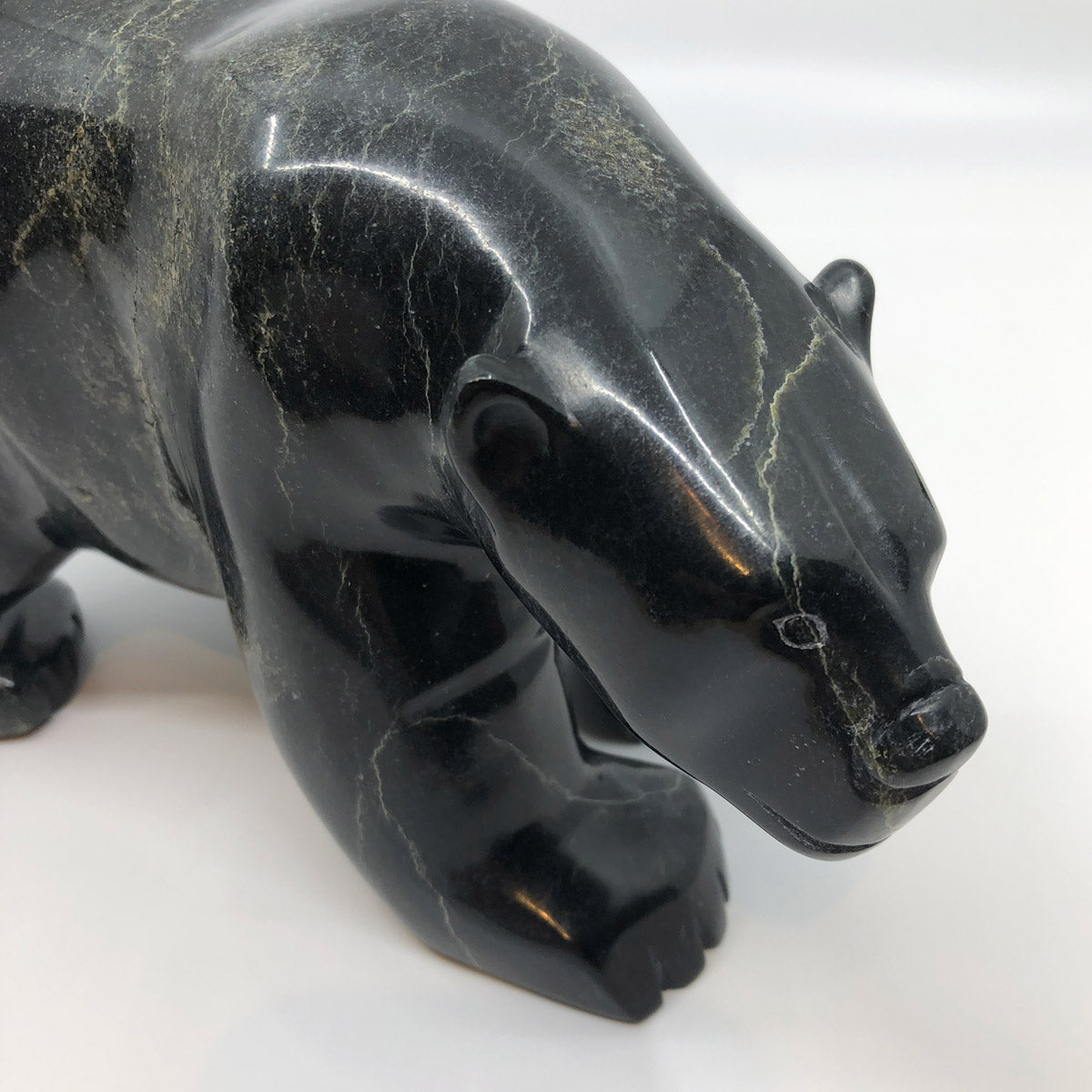
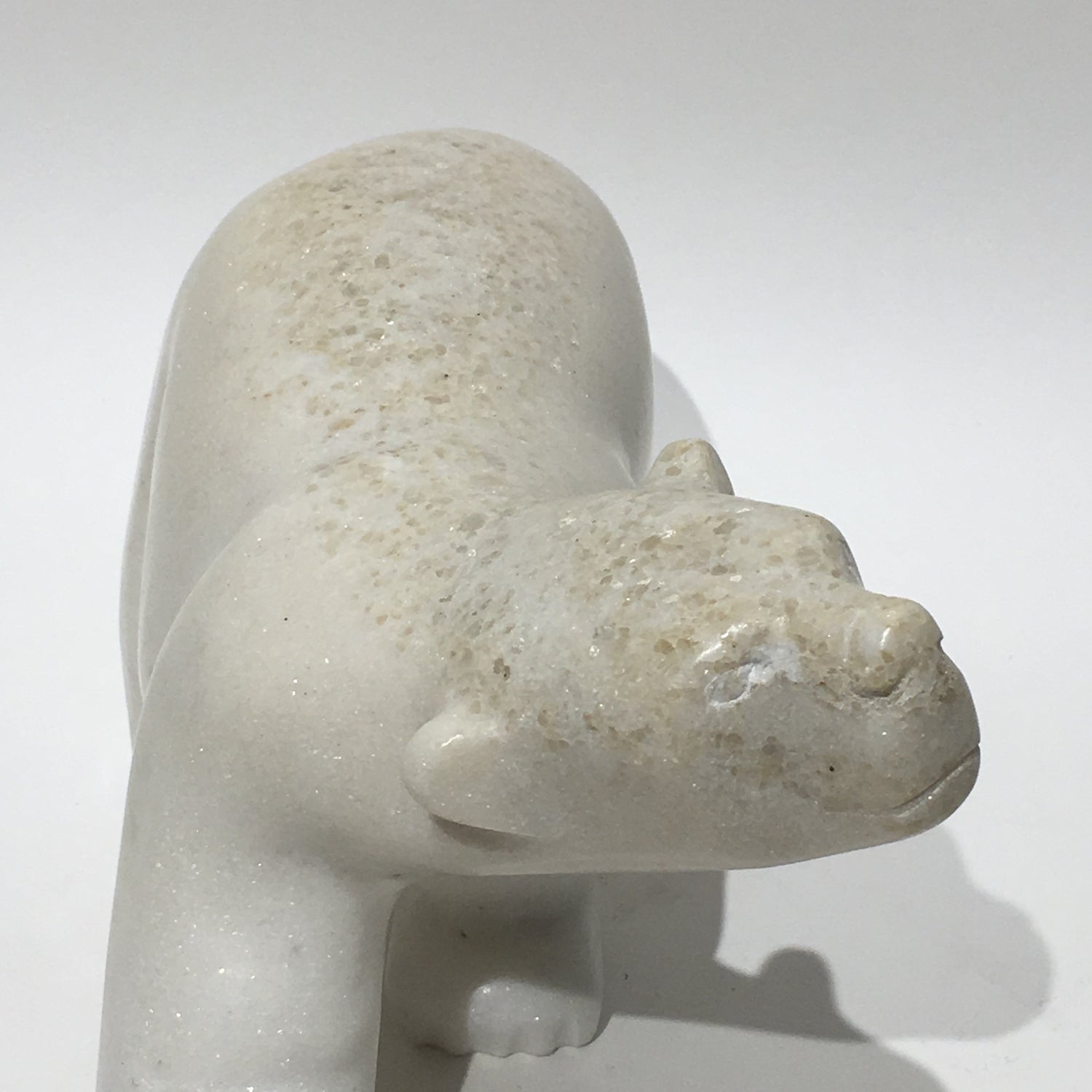
Polar Bear, Nanuq, called the "King of the North", is the greatest predator of the Arctic and a powerfully respected animal.He is the one animal that is at home both on land and water.He is built for his environment and has no troubles surviving the long, harsh winters. The polar bears of Nunavut tend to be solitary creatures, generally travelling alone in the winter. When you see two bears together, they are most likely siblings who have learned to hunt together with utmost success.
Some Inuit believe that how we live our lives affects what we become in the afterlife. Apparently, the best reward for a life-well-lived is to return in the form of the polar bear.This is because the ‘King of the Arctic’, as he is endearingly called, is strong enough to survive the long, cold winters.
This piece is carved in honour of the animal itself; it celebrates the polar bear, his spirit, his strength, and his legend.May he always be a source of inspiration.
In typical Inuit fashion, Pauloosie Tunnillie learned to carve by watching elder carvers in the community of Cape Dorset. He is a member of the well-known Tunnillie family. The son of Ashevak Tunnillie and grandson of Tayaraq and master carver Qavaroak (Kabubuwa) Tunnillie, Ashevak has a style that embraces his elder’s work.
Using indigenous serpentine from Baffin Island, Pauloosie follows the natural rhythms of the stone then highly polishes the piece to obtain a rich and suggestive work of art. His works express a feel for movement and incorporate the inner nature of the particular stone. The artist’s attention to detail, particularly with the bear’s face, is conscious of his father’s approach.
As a younger artist Pauloosie’s exhibition history is naturally just beginning, although it needs to be noted that his work has been included in group exhibitions in Canada and the United States.
Subscribe to our emails
Be the first to know about new collections, exhibitions and news
Choosing a selection results in a full page refresh.