Native Art Gallery


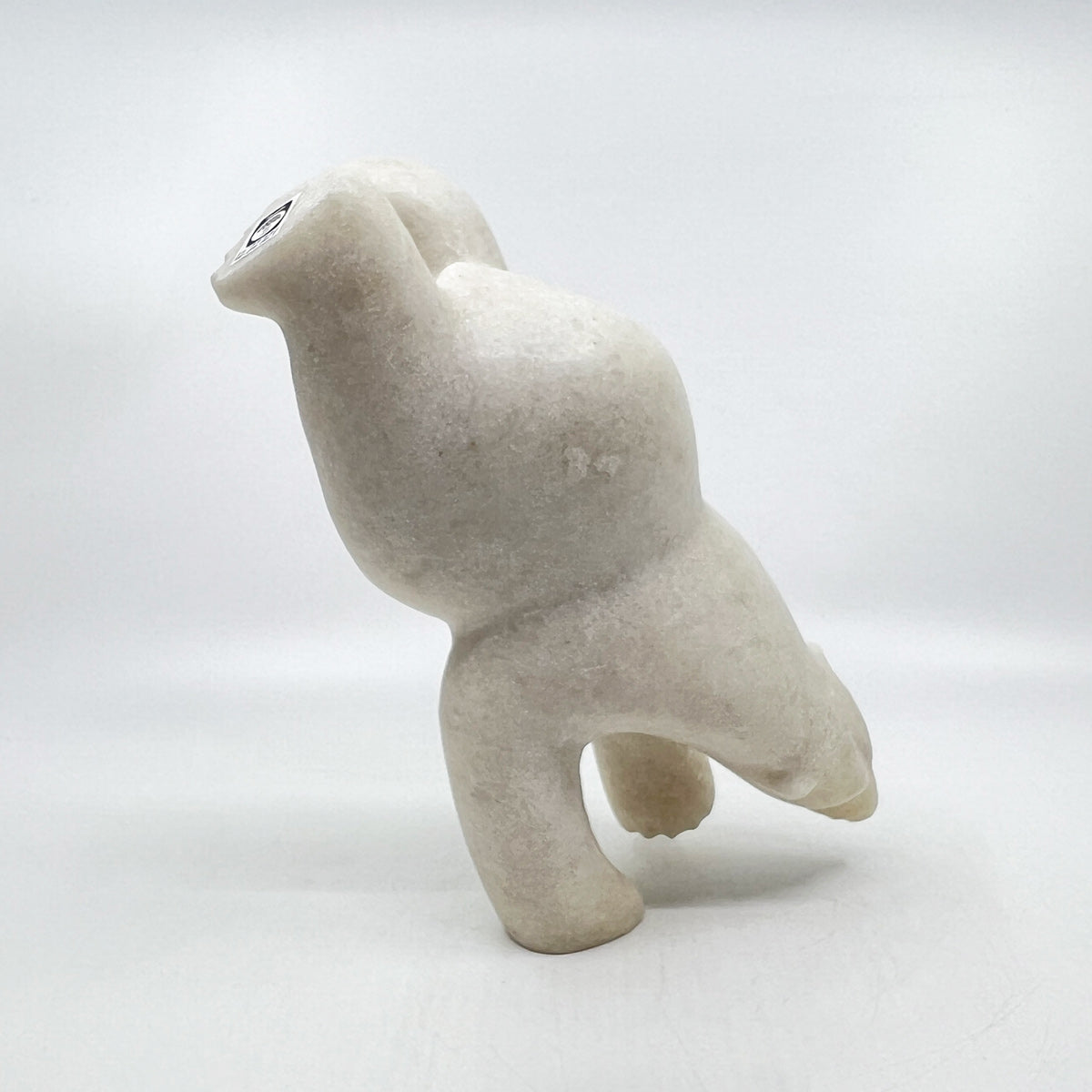
Dancing Bear

Dancing Bear

Artist: Oqittuq Shaa

Community: Cape Dorset

Medium: Marble

Dimensions (in): W 3.0 x H 8.0 x D 2.5

Reference: 109398


Regular price $1,625.00 CAD
Regular price Sale price $1,625.00 CAD
Sale Sold

Endearingly called the "King of the North", the Polar Bear, or Nanuq, is the greatest predator of the Arctic and a powerfully respected animal.  He is the one animal that is at home both on land and water.  He is built for his environment and has no troubles surviving the long, harsh winters.

Some Inuit believe that how we live our lives affects what we become in the afterlife. Apparently, the best reward for a life-well-lived is to return in the form of the polar bear.  This is because the ‘King of the Arctic’, as he is endearingly called, is strong enough to survive the long, cold winters. Instead of carving polar bears only in walking positions or other poses often seen in nature, Inuit carvers began to make bears in upright positions, often standing on one hind leg.  This pose represents the polar bear in a happy state of dancing and celebration. Some carvers claim that dancing bears represent a form of shamanism and transformation between a human and a bear.

The Dancing Bear shows gratitude for having been recognized and rewarded for his efforts.  May this sculpture celebrate the successes of your life.

View full details

Oqittuq Shaa

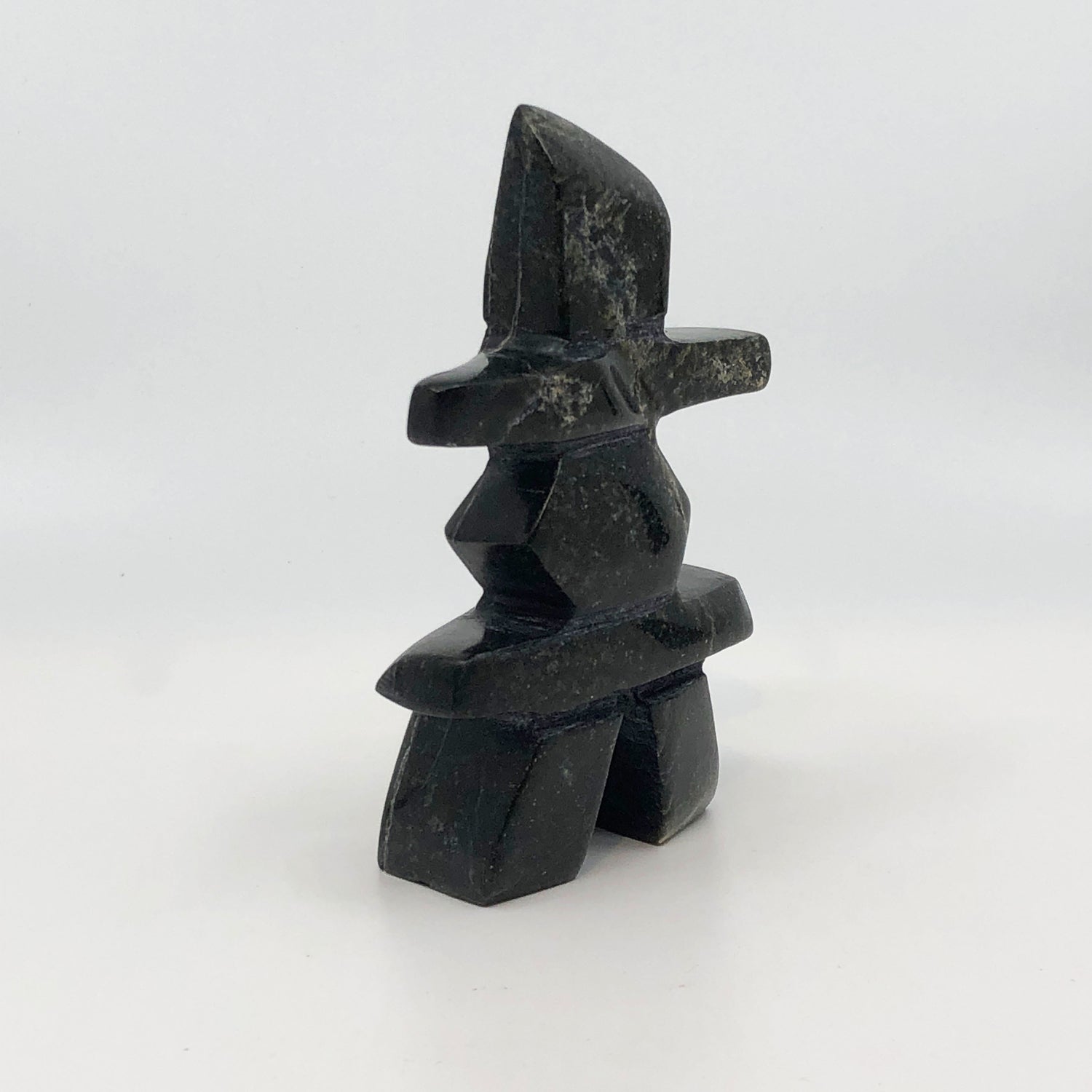
Oqittuq Shaa is an Inuit artist from Cape Dorset, Nunavut, known for his soapstone carvings, particularly those depicting inukshuks and other iconic Arctic forms. His work is a reflection of life in the Canadian Arctic, capturing the spirit and environment of the Inuit culture. Shaa works primarily with serpentine stone, a material favored by many Inuit sculptors for its durability and the way it polishes to a high shine. His pieces often blend traditional Inuit themes with a modern aesthetic, making them both culturally significant and visually striking.

Shaa is part of a long tradition of Inuit sculpture, where artists carve representations of the animals and landscapes that are central to their way of life. His work continues to contribute to the rich legacy of Inuit art, which has been recognized both in Canada and internationally.